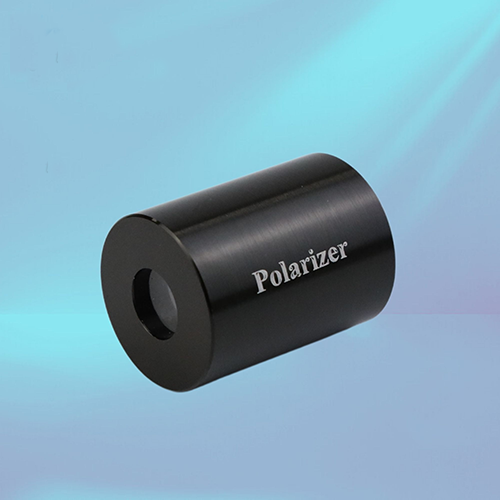
DÉPOLARISEUR DOUBLE DE TYPE BABYNINE
Aug 04, 2026
Un dépolarisateur haute tension (HV) unique ne peut dépolariser toute la lumière polarisée, en particulier la lumière polarisée linéairement selon les orientations horizontale et verticale, ce qui limite son champ d'application. Un dépolarisateur HV unique peut être assimilé à un prisme de Wollaston à angle structurel extrêmement faible. Comme illustré sur la figure 1, la lumière est divisée en deux faisceaux, o et e, se propageant orthogonalement et dans la même direction dans sa moitié avant ; dans sa moitié arrière, elle est à nouveau divisée en deux faisceaux, oe et eo, polarisés linéairement avec des directions de réfraction opposées. L'intensité de ces deux faisceaux varie avec l'angle d'azimut selon des lois sinusoïdales ou cosinusoïdales, et diffère généralement entre eux, ce qui engendre une corrélation de polarisation significative. Par conséquent, pour la dépolarisation de lumière monochromatique à l'aide d'un dépolarisateur HV, un angle d'azimut de 45° est nécessaire. Figure 1 S'appuyant sur le principe des dépolarisateurs de type HV, deux dépolarisateurs de type HV sont combinés par une rotation de 45 degrés pour former un dépolarisateur double de type Babynett, comme illustré sur la figure 2. Cette conception permet au second dépolarisateur de type HV de dépolariser efficacement les composantes de polarisation linéaire horizontale ou verticale du premier dépolarisateur de type HV, surmontant ainsi les limitations fonctionnelles d'un seul dépolarisateur de type HV. Figure 2 : Schéma structurel du dépolarisateur double de type Babynine
EN SAVOIR PLUS